
Master platelet-rich plasma and platelet-rich fibrin techniques for facial rejuvenation, hair restoration, and skin biostimulation. Evidence-based PRP training with hands-on clinical sessions in Sydney.

Program overview
Platelet-rich plasma (PRP) and platelet-rich fibrin (PRF) are autologous biostimulation treatments that harness the regenerative properties of a patient’s own blood to stimulate collagen production, improve skin quality, and promote hair follicle health. As one of the fastest-growing areas in aesthetic medicine, PRP and PRF offer nurses a natural, evidence-supported treatment modality with a strong safety profile and growing patient demand.
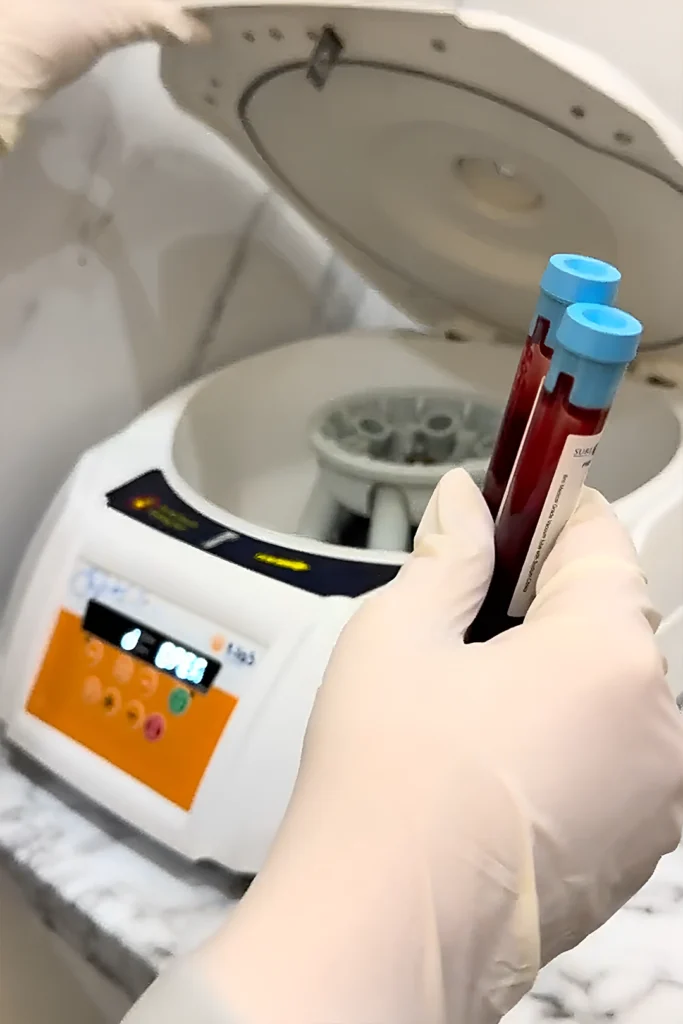
Our PRP and PRF training covers blood collection, centrifuge technique, plasma separation, and the clinical applications of injectable PRP, topical PRF, and PRF membrane creation — for facial rejuvenation, under-eye treatment, hair loss management, and combination therapy with microneedling or lasers. All protocols are aligned with Australian infection control standards and TGA regulations.
PRP & PRF curriculum
The program covers the science of platelet biology and growth factors through to hands-on blood processing, PRP preparation, and supervised injection techniques for aesthetic applications.
Is This Right for You?
Registered nurses wanting to offer patients autologous, natural treatment alternatives — PRP and PRF provide effective skin rejuvenation and hair restoration options that appeal to patients seeking non-synthetic injectable treatments.
Aesthetic nurses interested in the growing field of non-surgical hair loss treatment, where PRP is one of the most evidence-supported interventions for androgenetic alopecia in both men and women.
Aesthetic clinic teams wanting to develop a comprehensive regenerative and biostimulation menu that includes PRP facials, PRF threads, and combination protocols alongside their injectable and laser services.
Dr Sana Pirzada is a highly experienced aesthetic practitioner and the founder of Aesthetics Consults. With over 15 years in cosmetic medicine, she has mentored hundreds of registered nurses across Australia, helping them build safe, confident, and AHPRA-compliant practices.
Her mentoring approach combines deep anatomical knowledge, hands-on injectable technique training, and real-world business guidance — everything you need to thrive in the competitive aesthetic medicine landscape.
PRP (platelet-rich plasma) uses anticoagulants to keep the blood liquid, producing an injectable plasma rich in platelets. PRF (platelet-rich fibrin) uses no anticoagulants and is spun at lower speeds — creating a fibrin-based matrix with higher growth factor concentrations. PRF can also be formed into membranes and threads for topical application. Our training covers both and the clinical indications for each.
PRP and PRF are used for facial skin rejuvenation (skin quality, fine lines, tone), under-eye darkening and hollowness, hair loss (androgenetic alopecia, telogen effluvium), scalp health, and as combination therapy with microneedling, fractional laser, or injectable treatments. Evidence is strongest for androgenetic alopecia and general skin biostimulation.
PRP and PRF are autologous (prepared from the patient's own blood) and are not classified as therapeutic goods under the TGA when prepared and used in the same patient. However, practitioners should comply with relevant blood-handling, infection control, and scope of practice requirements. Our training covers all relevant compliance considerations for Australian nurses.
For skin rejuvenation, 3 sessions spaced 4–6 weeks apart is a standard initial protocol. For hair restoration, a minimum of 3–6 sessions is typically recommended. Maintenance sessions every 3–6 months help sustain results. Our training includes patient education and treatment planning guidance.
