
Evidence-based microneedling and collagen induction therapy (CIT) training for registered nurses. Covers device selection, needle depth, treatment protocols, topical serums, and combination therapy with PRP and laser.

Program overview
Microneedling (collagen induction therapy / CIT) is a versatile, minimally invasive treatment that creates controlled micro-injuries in the dermis to stimulate the natural wound healing cascade — driving collagen and elastin production. With appropriate device selection and depth parameters, microneedling delivers clinically significant improvements in acne scarring, skin texture, fine lines, enlarged pores, stretch marks, and overall skin quality.
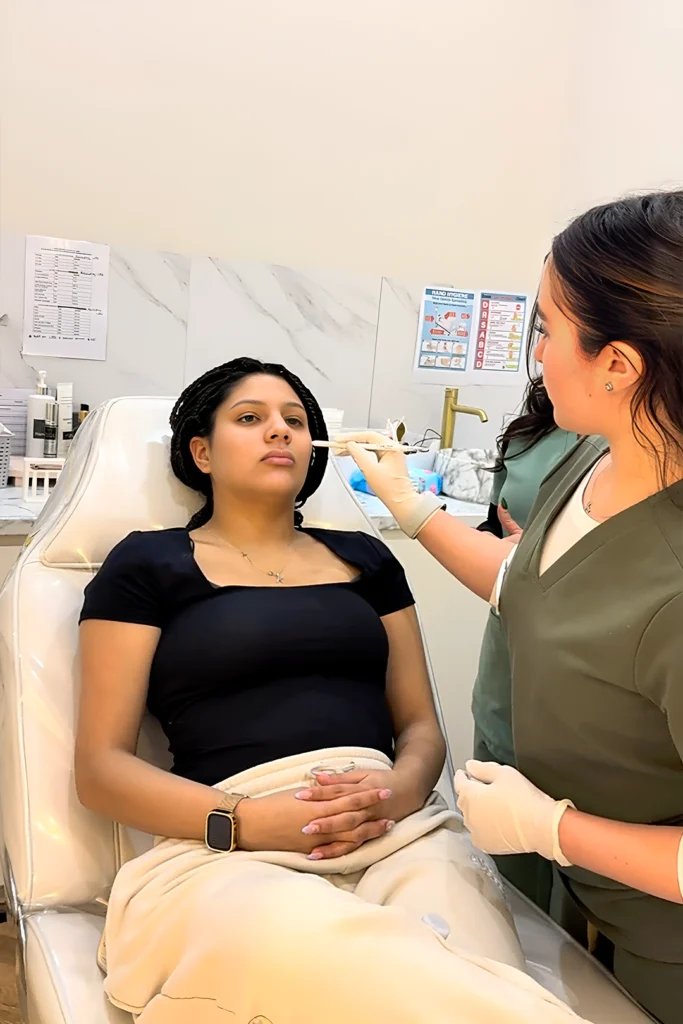
Our microneedling training program covers the biology of collagen synthesis, device types (motorised vs manual, pen vs roller), needle depth selection for different skin concerns and body areas, topical serum application, pre- and post-treatment protocols, and combination therapy with PRP and fractional laser for enhanced results. All training is supervised and hands-on.
Microneedling curriculum
The program covers collagen biology and device science, then progresses through supervised hands-on treatment protocols for facial and body microneedling, combination therapy, and evidence-based aftercare.
Is This Right for You?
Registered nurses wanting to add a versatile, high-demand, low-downtime treatment to their aesthetic service offering — microneedling is suitable for a broad patient population and complements injectable and laser treatments.
Qualified skin therapists who have been performing basic microneedling and want formal training to progress to medical-grade needle depths, acne scar protocols, and combination therapy.
Registered nurses planning to open an aesthetic clinic or work independently who need comprehensive mentoring in both clinical competence and the business of running a successful aesthetics practice.
Dr Sana Pirzada is a highly experienced aesthetic practitioner and the founder of Aesthetics Consults. With over 15 years in cosmetic medicine, she has mentored hundreds of registered nurses across Australia, helping them build safe, confident, and AHPRA-compliant practices.
Her mentoring approach combines deep anatomical knowledge, hands-on injectable technique training, and real-world business guidance — everything you need to thrive in the competitive aesthetic medicine landscape.
Microneedling (collagen induction therapy) treats acne scarring, atrophic scars, fine lines and wrinkles, skin texture and pore size, hyperpigmentation, stretch marks, and general skin quality decline. At deeper depths (1.5–2.5mm), it can significantly improve atrophic acne scars by stimulating deep dermal collagen remodelling.
Needle depth varies by indication: 0.25–0.5mm for topical product absorption and superficial skin quality; 0.5–1.0mm for fine lines and pore size; 1.0–1.5mm for wrinkles and generalised texture; 1.5–2.0mm for deeper atrophic scars. Body areas with thicker skin may require depths up to 2.5mm. Our training covers indication-based depth selection in detail.
Nano-needling uses silicon-tip cartridges with micro-channels that do not penetrate past the stratum corneum (top skin layer). It is primarily a topical product delivery technique with no wound healing induction. Traditional microneedling penetrates into the dermis to trigger collagen synthesis. Our training covers both techniques and their appropriate clinical applications.
Yes — combining PRP with microneedling is a well-established protocol. PRP is either applied topically to the skin during microneedling (to be driven into the micro-channels) or injected into the dermis separately. The combination enhances collagen induction, improves healing, and may extend the duration of results. Our training includes combination PRP + microneedling protocols.
